On Friday, President Trump and Chinese President Xi Jinping wrapped up their two-day summit in Beijing. Boeing shares dropped 4% on disappointment that China committed to only 200 jets versus the 500 Wall Street had been pricing in. Trump himself hedged the language, saying the deal “was a commitment, I mean, sort of like a statement.”
Cue the “underwhelming” takes. Euronews ran the headline. CBS News called it a “stabilization, not breakthrough.” The Atlantic Council piled on.
But buried inside the same announcement — the part the headline writers missed — was this:
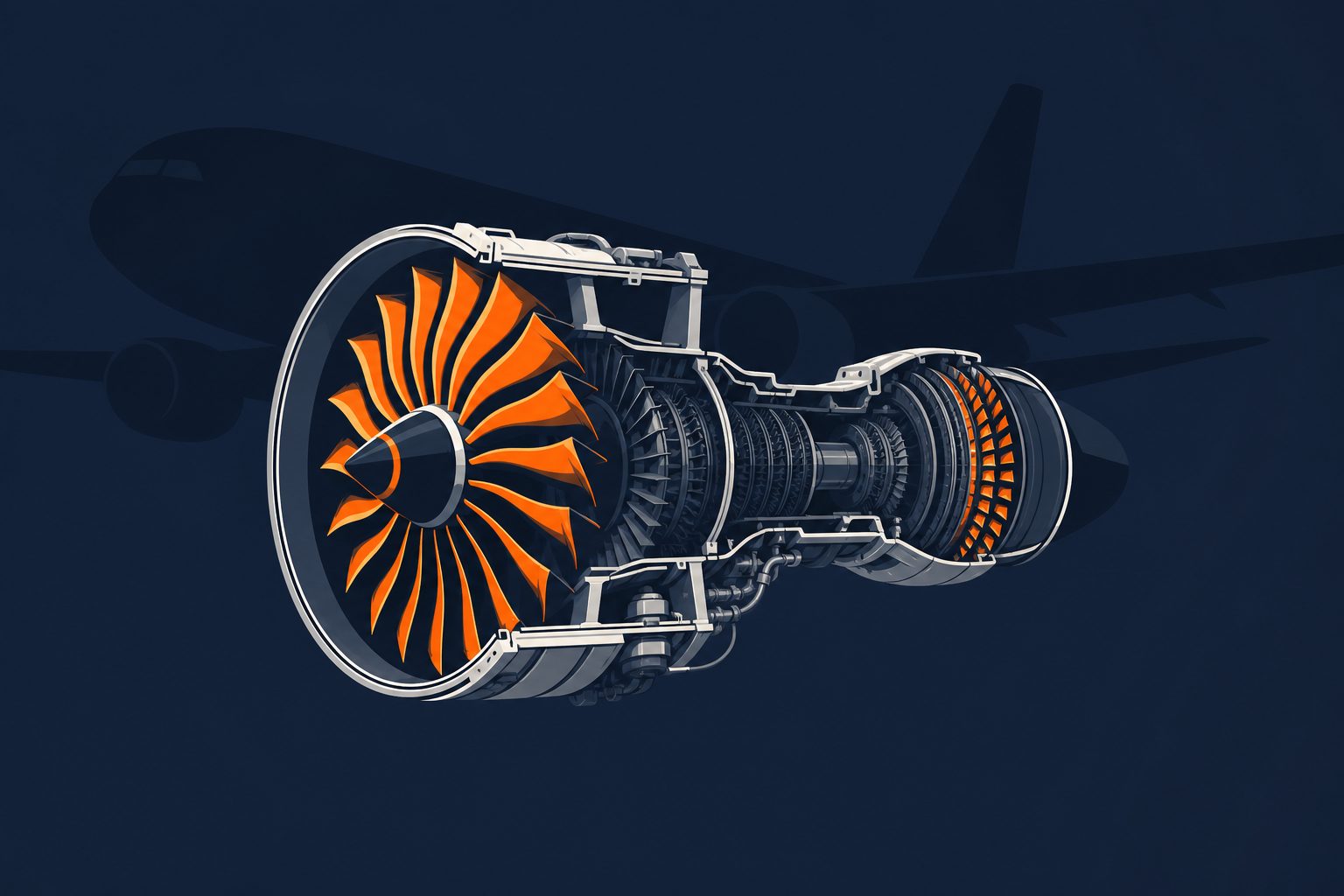
400 to 450 GE Aerospace jet engines.
That’s GE’s biggest single China engine order since 2017. And GE shares fell 2% in the Boeing undertow, even though the engine deal is arguably the more important commercial commitment in the package.
Why engines matter more than airframes.
Three reasons aerospace investors care about engines over airframes:
- Higher margins. Engine gross margins run 20–25% versus airframe margins closer to 10–12%. The economics of the engine business are why GE Aerospace trades at 30x earnings while Boeing trades at a fraction of that.
- The maintenance tail is forever. Every commercial engine generates 30+ years of high-margin service, parts, and overhaul revenue. The engine sale is the appetizer; maintenance is the main course.
- Smaller hedge needed. Boeing’s 200-jet order is firm only if China actually papers the contracts. GE’s engine order is layered — even if some Boeing jets slip, the engines also fly on Airbus aircraft (A320neo, A330neo) that China is still ordering separately.
What needs to happen next.
The summit produced a “statement,” not a contract. The next 60 days are what matters:
- Firm purchase agreement. If China’s state aviation buyer papers an actual contract in the next two months, GE re-rates higher.
- Engine option exercises. Existing Chinese 737 MAX orders carry CFM LEAP engine options (CFM is the GE Aerospace / Safran joint venture). Any uptick in option exercises is upside.
- Servicing contract follow-ons. The long-tail maintenance contracts get signed 6–18 months after delivery. Watch for those starting Q4.
If the deal stays a “statement” — as Trump hedged Friday — GE is range-bound at current levels. That’s not a bad outcome; that’s a free option.
The Play
The cleanest setup is buying GE on the Boeing panic dip, not chasing. The narrative will catch up to the engine math within 30 days. If you want second-derivative exposure, aerospace suppliers (HEI, TDG, SPR) all benefit from any firm engine order — they make the precision components inside every CFM LEAP.
One more thing the headlines missed: the deal also covered up to 750 total aircraft “if China does a good job.” That’s Trump-speak for “there’s a performance clause,” but the option exists. Larry Culp now has a roughly $40 billion engine order embedded in the diplomatic small print. Don’t bet against that.
Stay caffeinated.