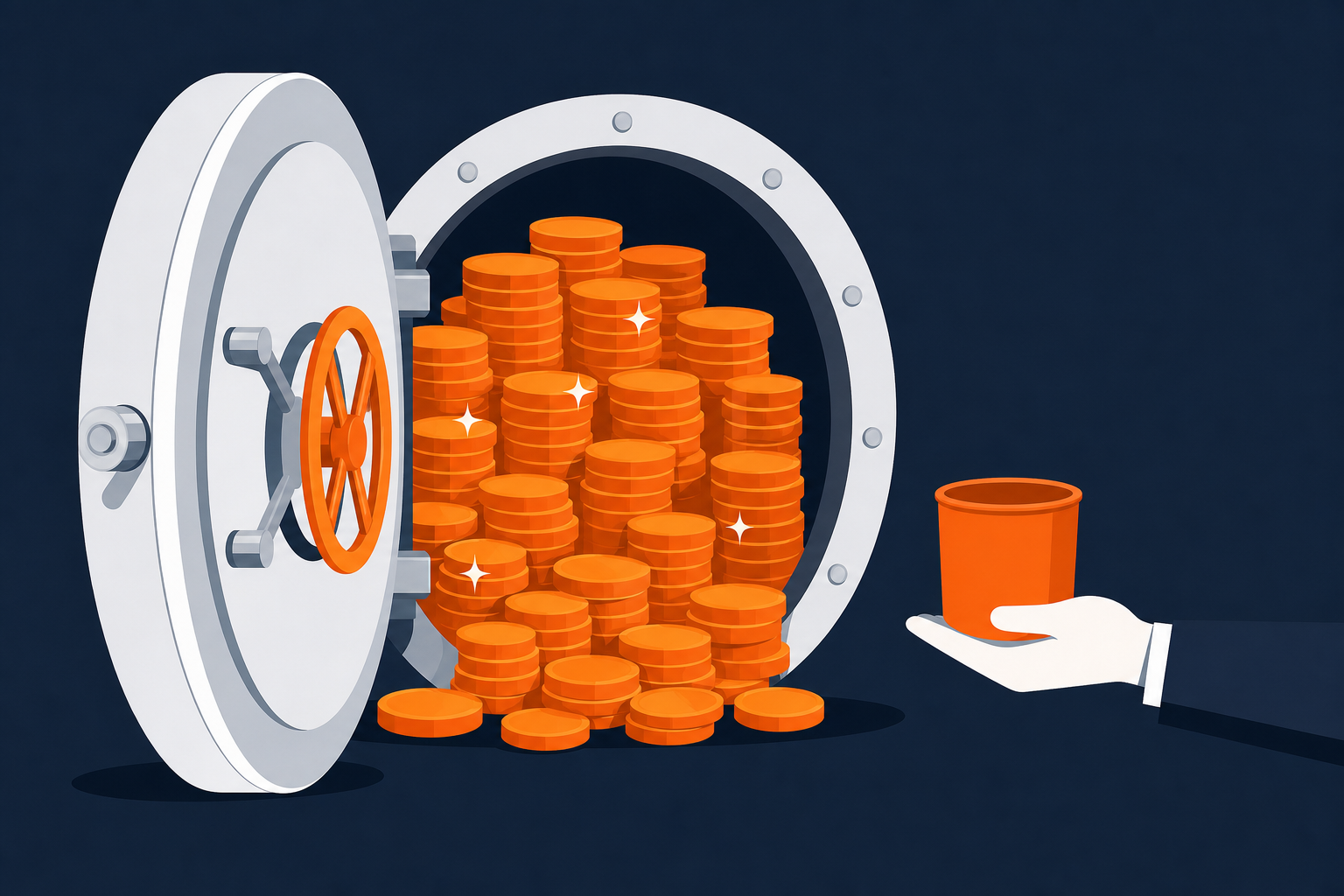
Alphabet just did something it hasn’t done since the IPO era: ask the market for money.
The Google parent announced plans to raise roughly $80 billion through a stock sale to fund artificial-intelligence infrastructure — the biggest capital raise in its history and, according to data compiled by Bloomberg, on track to be the largest equity capital-markets transaction ever. A reported ~$10 billion slug is coming from Berkshire Hathaway, a notable vote of confidence from the world’s most famous value shop.
Investors did not throw a party. GOOGL fell about 4%.
The discomfort is easy to understand. Alphabet is one of the most cash-generative businesses on the planet — so why dilute shareholders instead of writing a check? The answer is the sheer scale of the bill: Alphabet has guided to capital expenditures of up to ~$190 billion in 2026, with a “significantly” higher number flagged for 2027. Even a money machine has limits when the AI arms race costs this much.
The bull case: lock in compute and data-center capacity now, while you can, and let a Buffett-blessed raise do the financing. The bear case: if even the best business models can’t self-fund AI, what does that imply about the returns everyone’s underwriting?
The Play: A raise this size is a tell about how expensive the AI buildout has gotten. Watch the capex-to-free-cash-flow ratio across mega-cap tech — when hyperscalers start issuing equity instead of paying out of pocket, it’s a signal the cycle is shifting from “cheap and easy” to “real money on the line.” Not a recommendation — just a gauge worth tracking.